
Best Subreddits for Business Ideas: 15 High-Signal Communities (2026)
Find business ideas on Reddit with 15 high-signal subreddits ranked by idea density, what to search, what to ignore, and real startup ideas found there.
12 min read

Introduction
Reddit has over 100,000 active communities where people openly describe their problems, frustrations, and unmet needs. For founders looking for business ideas on Reddit, the challenge is knowing where to look. Most subreddits are noise. A handful are signal factories.
We analyzed 50K+ Reddit posts across dozens of communities to identify which subreddits consistently produce actionable business ideas. This is not a list of "communities for entrepreneurs" - most of those are filled with self-promotion. Instead, we ranked subreddits by idea density: how many concrete, buildable product ideas surface per week from real user complaints.
The result? The best subreddits for business ideas are often not the ones with "business" or "startup" in the name.
Tier 1: Highest Idea Density
These subreddits consistently surface 5-10+ actionable ideas per week.
1. r/selfhosted (550K+ members)
Why it ranks #1: r/selfhosted is the single best subreddit for finding micro SaaS ideas. Users here are technically sophisticated but time-poor. They describe exact features they want, compare existing tools in detail, and openly state what they would pay for. The pain points are specific and buildable.
What to search for:
- "looking for a self-hosted alternative to..."
- "is there anything that does X and Y together?"
- "I've been searching for a tool that..."
What to ignore: Homelab hardware discussions, NAS setup threads, Docker compose troubleshooting.
Real idea found here: Multiple posts requesting a self-hosted alternative to Calendly with team scheduling - specific enough to build, recurring enough to validate demand.
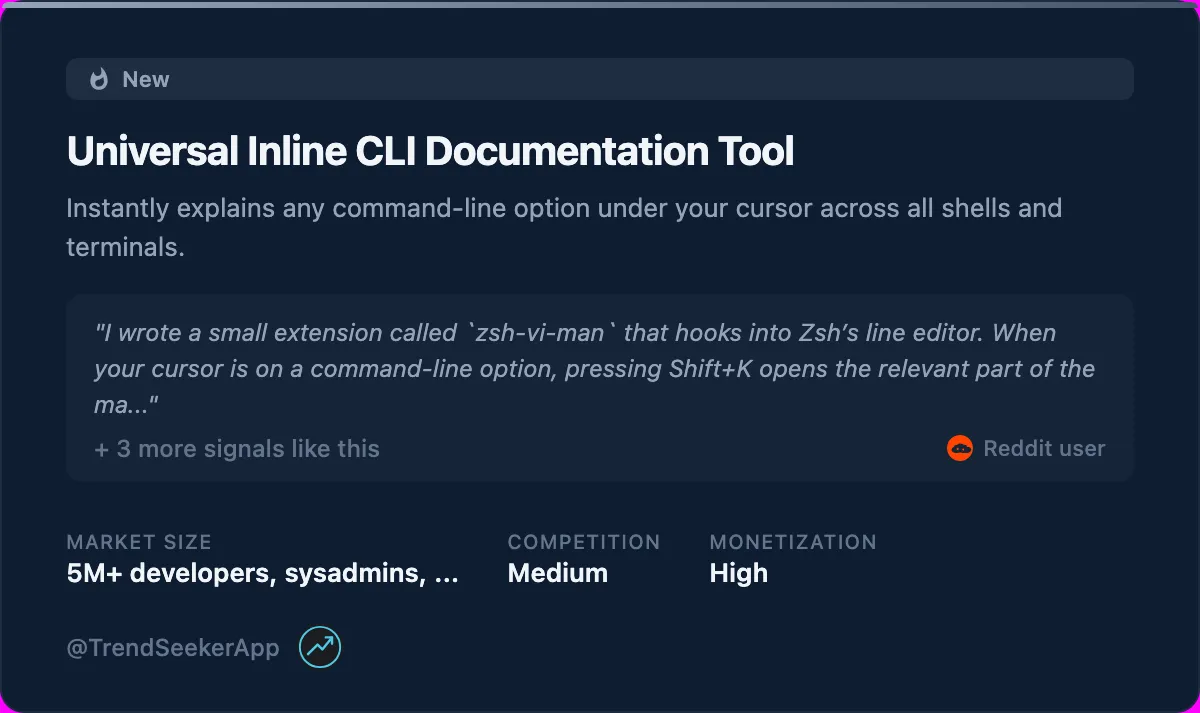
Here is an example of the kind of idea that surfaces from r/selfhosted - a developer tool born from real CLI frustrations:
2. r/SaaS? (400K+ members)
Why it ranks high: The most concentrated source of SaaS-specific feedback on Reddit. Founders share what they're building and get honest feedback. Users post "looking for a tool" threads. The comments often contain more signal than the posts - people describe workarounds they use, which reveals gaps in existing solutions.
What to search for:
- "what tools do you use for..."
- "alternative to [expensive tool]"
- "I built X" threads (read the comments for feature requests)
What to ignore: Self-promotion posts, "roast my landing page" threads (useful for design, not ideas), generic "how to get my first customer" posts.
Real idea found here: Repeated requests for a lightweight CRM? that integrates with Stripe for small SaaS teams - not Salesforce complexity, just pipeline + payment status.
3. r/smallbusiness (2.4M+ members)
Why it ranks high: Small business owners are not technical. They describe problems in plain language and are willing to pay for solutions. Posts here reveal B2B? opportunities that developers would never discover in their own circles.
What to search for:
- "is there software that..."
- "how do you handle [process]?"
- "I'm spending too much time on..."
What to ignore: Tax advice requests, "should I start a business" posts, legal questions.
Real idea found here: Small business owners struggling with scheduling employees across multiple locations. The existing tools are either enterprise-priced or too simple.
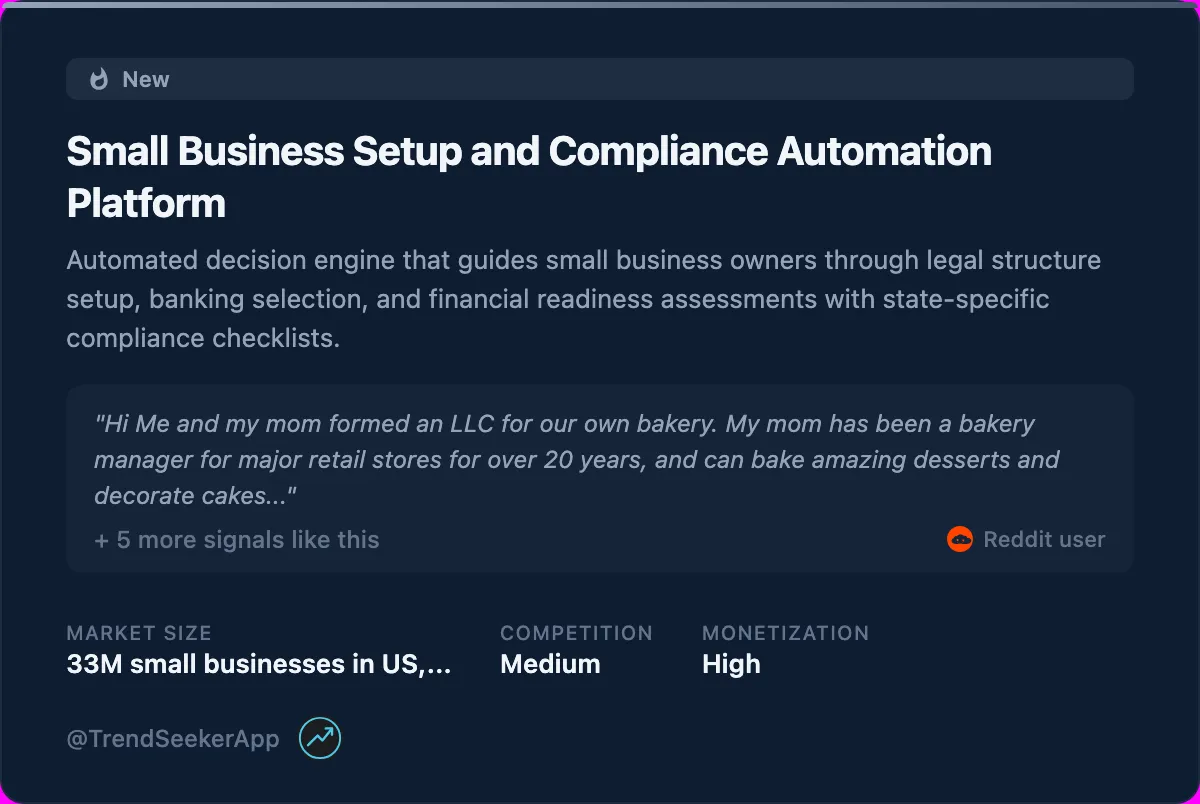
This kind of compliance/setup pain point appears constantly in r/smallbusiness:
| Subreddit | Members | Best For | Idea Density |
|---|---|---|---|
| r/selfhosted | 550K+ | B2B SaaS, developer tools | High |
| r/SaaS | 400K+ | SaaS products, feature gaps | High |
| r/smallbusiness | 2.4M+ | B2B tools, vertical SaaS | High |
Tier 2: Strong Signal, Larger Communities
These subreddits have more noise due to size, but produce 3-5 solid ideas per week if you filter well.
4. r/Entrepreneur (5.1M+ members)
Signal quality: Mixed. The subreddit is large enough that genuinely useful threads get buried under motivational posts and self-promotion. But the "what problem do you wish someone would solve?" threads are gold when they appear.
What to search for: Sort by "new" instead of "hot". Search for "what tool" or "frustrated with" to skip the motivation posts.
What to ignore: "How I made $10K in a month" posts, affiliate marketing discussions, dropshipping threads.
5. r/startups (1.8M+ members)
Signal quality: Good for understanding market gaps. The weekly "share your startup" threads reveal what founders are building, and the comments reveal what users actually want. Monthly "what are you working on" threads surface emerging trends.
What to search for: Weekly threads, "share your startup" posts, and comments on Show HN-style threads where users describe what they wish the product did differently.
What to ignore: Fundraising advice, "how to find a co-founder" posts (unless you are looking for co-founder matching ideas).
6. r/webdev (2.3M+ members)
Signal quality: Excellent for developer tools ideas. Developers describe their workflow problems in technical detail. When a developer says "I waste 2 hours a week doing X manually" - that is a SaaS product waiting to be built.
What to search for:
- "I wish [framework/tool] had..."
- "is there a VS Code extension that..."
- "I built a script to automate..."
What to ignore: "Which framework should I learn?" debates, job posting threads.
7. r/productivity (3M+ members)
Signal quality: Strong for consumer and prosumer app ideas. Users describe their workflows, tools they have tried and abandoned, and what is missing. The frustration posts ("I've tried every to-do app and none of them...") are the signal.
What to search for:
- "I've tried X and Y but..."
- "is there an app that combines..."
- "my workflow for [task] is broken"
What to ignore: Morning routine posts, book recommendations, generic productivity tips.
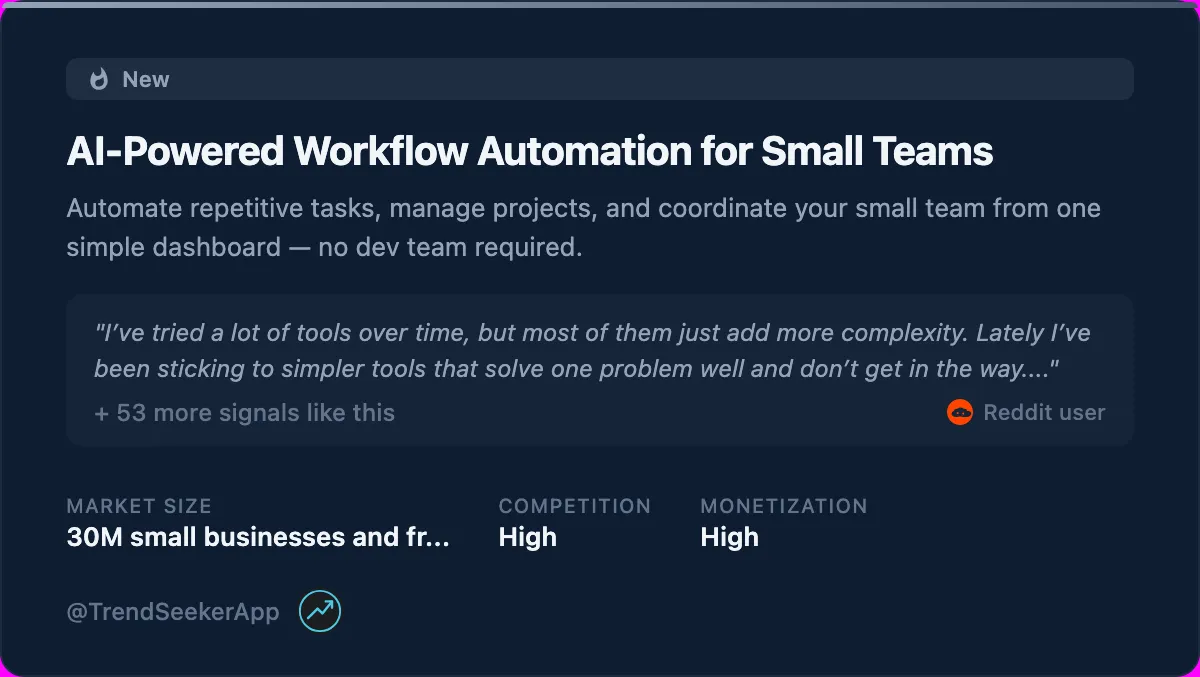
This workflow automation idea is exactly the type that surfaces when r/productivity users describe their broken processes:
| Subreddit | Members | Best For | Idea Density |
|---|---|---|---|
| r/Entrepreneur | 5.1M+ | Market gaps, problem validation | Medium |
| r/startups | 1.8M+ | Emerging trends, product gaps | Medium |
| r/webdev | 2.3M+ | Developer tools, workflow gaps | Medium |
| r/productivity | 3M+ | Consumer apps, prosumer tools | Medium |
Tier 3: Niche Signal Sources
These subreddits produce fewer ideas overall but the ideas tend to be more specific, less competitive, and closer to "ready to build."
8. r/SideProject (650K+ members)
Founders showing what they built. The real value is in the comments: users describe features they want, alternatives they have tried, and willingness to pay. Small community, high signal ratio.
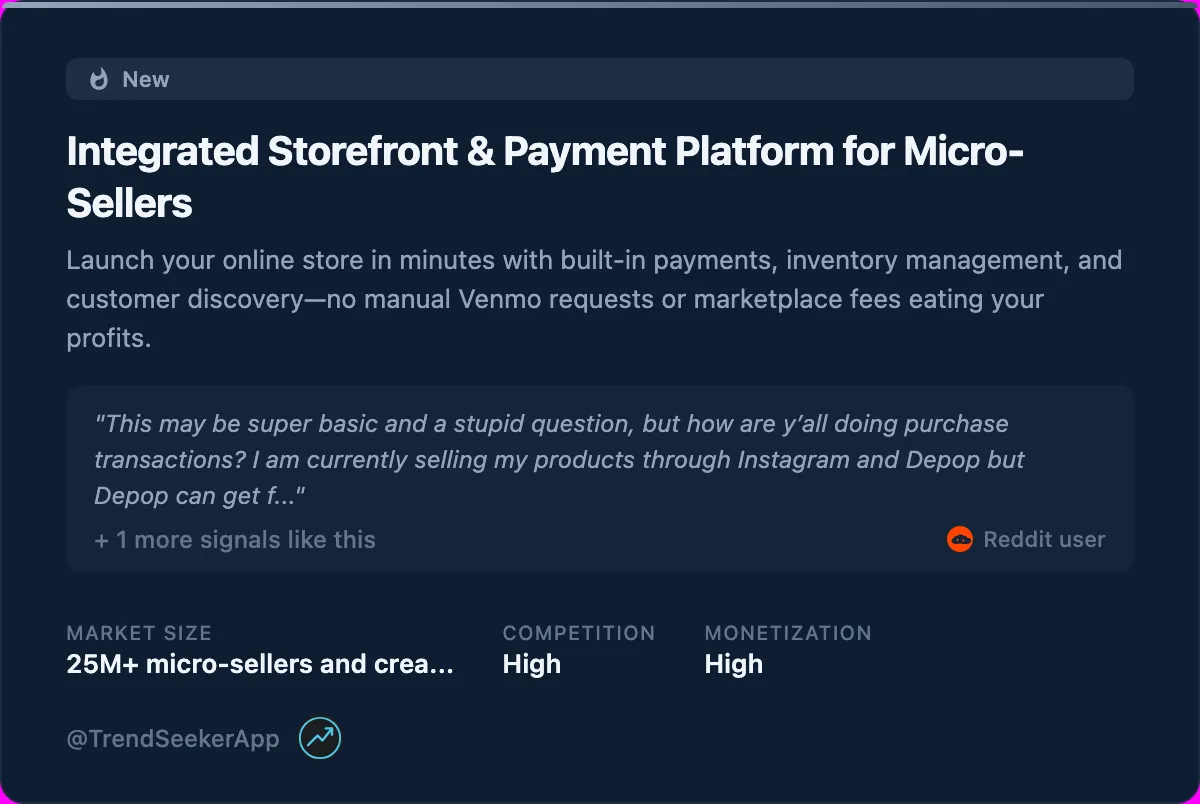
Ideas like this storefront platform come from watching what micro-sellers complain about in r/SideProject threads:
9. r/automation (19K+ members)
Users describing manual workflows they want automated. Every "how do I automate X?" post is a potential SaaS product. Look for posts where users describe multi-step processes involving multiple tools - integration opportunities.
10. r/personalfinance (21M+ members)
Massive audience with specific financial pain points. Users describe budgeting frustrations, tax confusion, investment tracking gaps. Fintech ideas with built-in demand validation. Filter heavily - most posts are advice questions, not product opportunities.
11. r/programming (5.8M+ members)
Broader than r/webdev. Look for "rant" threads where developers complain about tooling, documentation generators, testing frameworks. Enterprise pain points surface here that do not appear in smaller communities.
12. r/AppIdeas (31K+ members)
People explicitly posting app ideas. The quality varies wildly, but occasionally someone describes a genuine problem they have. More useful for validation than discovery - check if ideas posted here match patterns you are seeing elsewhere.
13. r/InternetIsBeautiful (16.6M+ members)
Users share web tools they love. The value: read the comments. When someone shares a free tool and comments say "I wish it also did X" or "this is great but I need Y" - those are product extensions with proven interest. Huge audience means massive upvote signals.
14. r/indiehackers (100K+ members)
The Reddit counterpart to IndieHackers.com. Founders share revenue numbers, build-in-public updates, and tool stacks. The "what tools are you paying for?" threads reveal SaaS markets with proven willingness to pay.
15. r/business_ideas (250K+ members)
The most obvious subreddit, but not the highest quality. Many posts are fantasies rather than validated pain points. Best used as a secondary source - if an idea you found in r/selfhosted also appears here, that strengthens the signal.
| Rank | Subreddit | Members | Category | Idea Density | Noise Level |
|---|---|---|---|---|---|
| 1 | r/selfhosted | 550K+ | B2B / DevTools | High | Low |
| 2 | r/SaaS | 120K+ | SaaS | High | Medium |
| 3 | r/smallbusiness | 2.4M+ | B2B / Vertical SaaS | High | Medium |
| 4 | r/Entrepreneur | 5.1M+ | General | Medium | High |
| 5 | r/startups | 1.8M+ | Startup trends | Medium | Medium |
| 6 | r/webdev | 2.3M+ | Developer tools | Medium | Medium |
| 7 | r/productivity | 3M+ | Consumer / Prosumer | Medium | High |
| 8 | r/SideProject | 650K+ | Indie / Side Projects | Medium | Low |
| 9 | r/automation | 19K+ | Workflow / Integration | Medium | Low |
| 10 | r/personalfinance | 21M+ | Fintech | Low | High |
| 11 | r/programming | 5.8M+ | Developer tools | Low | High |
| 12 | r/AppIdeas | 31K+ | App concepts | Low | Medium |
| 13 | r/InternetIsBeautiful | 16.6M+ | Web tools / Consumer | Low | High |
| 14 | r/indiehackers | 100K+ | Indie SaaS | Low | Low |
| 15 | r/business_ideas | 250K+ | General ideas | Low | High |
How to Filter Signal from Noise
Having the right subreddits is step one. Extracting actionable ideas from them is step two. Here is the filtering system we use across all 15 subreddits:
Step 1: Search, do not browse
Never scroll a subreddit's front page hoping to find ideas. Use Reddit's search with high-signal phrases:
High-intent search queries to use in any subreddit:
"I wish there was"- direct unmet need"is there a tool that"- active search for a solution"I'd pay for"- willingness to pay confirmed"why doesn't anyone make"- frustrated demand"alternative to"- existing market with switching intent
Step 2: Check upvote ratio
A post with 50+ upvotes confirms that other people share the pain point. A post with 1 upvote might be a one-off request. Look for posts where the comments contain "same" or "I need this too" - social proof that the demand is real.
Step 3: Look for recurring patterns
One post is a signal. The same request appearing in 3+ different subreddits over several months is validated demand. Cross-reference across communities. If r/selfhosted and r/smallbusiness both complain about the same problem, you have a product opportunity.
Step 4: Filter out chronic repeaters
Some categories appear constantly but are either saturated or impractical for solo founders. Skip these unless you have deep domain expertise:
- Generic AI productivity tools (overcrowded market)
- Social media scheduling tools (dozens of established players)
- Todo/note-taking apps (unless targeting a very specific niche)
- Crypto trading bots (regulatory complexity)
Automating Reddit Monitoring
Manually checking 15 subreddits weekly is not sustainable. Here are the practical options:
Free: F5Bot keyword alerts
F5Bot sends email alerts when specified keywords appear on Reddit. Set up alerts for your target phrases across the subreddits listed above. Limitation: no AI analysis or pattern detection. You still need to evaluate each alert manually.
Automated: Trend Seeker
Trend Seeker analyzes 453,011 matched signals from Reddit and other public sources automatically. Each business idea is scored by demand evidence, competition level, and market size. Instead of monitoring subreddits yourself, browse pre-validated ideas with evidence scores. The free idea validator lets you test your own ideas against the same dataset.
DIY: Reddit API? + custom scripts
If you are technical, Reddit's API lets you build custom monitoring. Pull posts matching high-signal phrases from your target subreddits, run basic NLP to group similar requests, and track frequency over time. Requires a Reddit API key and ongoing maintenance.
The Hidden Strategy: Niche Subreddits
The 15 subreddits above are the generalist starting points. The real edge comes from finding niche subreddits specific to the industry you want to serve. Examples:
- r/realtors (120K+) - Real estate agents describing workflow problems
- r/accounting (350K+) - Accountants frustrated with existing tools
- r/teachers (400K+) - Educators describing classroom pain points
- r/legaladvice (3M+) - Legal professionals revealing process gaps
- r/sysadmin (800K+) - IT admins describing infrastructure problems
The pattern: find a profession-specific subreddit, search for "I wish" and "is there a tool" and read what comes up. Niche subreddits produce micro SaaS ideas with smaller addressable markets but far less competition.
What to Do After Finding an Idea
Finding the idea is the first step. Before building anything:
- Validate demand: Use the free idea validator to check if similar ideas appear across multiple sources.
- Check competition: Search for existing solutions. If nothing exists, ask why - maybe the market is too small or the problem is harder than it looks.
- Talk to users: Reply to the Reddit posts where you found the idea. Ask follow-up questions. The thread authors are your first potential customers.
- Build small: Ship an MVP? that solves the core problem described in the Reddit posts. Do not add features that were not requested.
For a detailed framework, read our startup idea validation guide or the lazy founder's approach to validation.
Sources and Further Reading
- Reddit Inc - Official Reddit statistics and community data
- Subreddit Stats - Tracking subreddit growth and activity metrics
- F5Bot - Free Reddit keyword monitoring tool
- Find Business Ideas on Reddit: 50K Posts Analyzed - Our complete Reddit research playbook
- 37 Micro SaaS Ideas for 2026 - Validated ideas sourced from Reddit
- Turning Reddit Complaints into Business Ideas - How to mine complaint threads for opportunities
Ready to find your next business idea?
Explore validated business ideas backed by real user demand.
This week Trend Seeker found
+2,218ideas
and
+75,639signals
%22%20%2F%3E%0A%20%20%20%20%20%20%0A%20%20%20%20%20%20%3C!--%20Sun%20--%3E%0A%20%20%20%20%20%20%3Ccircle%20cx%3D%22270%22%20cy%3D%2280%22%20r%3D%2224%22%20fill%3D%22hsl(10%2C%2050%25%2C%2055%25)%22%20opacity%3D%220.85%22%20%2F%3E%0A%20%20%20%20%20%20%0A%20%20%20%20%20%20%3C!--%20Background%20Hill%201%20--%3E%0A%20%20%20%20%20%20%3Cpath%20d%3D%22M%200%2096%20Q%20160%2074%20400%2069%20L%20400%20160%20L%200%20160%20Z%22%20fill%3D%22hsl(25%2C%2030%25%2C%2068%25)%22%20%2F%3E%0A%20%20%20%20%20%20%0A%20%20%20%20%20%20%3C!--%20Midground%20Hill%202%20--%3E%0A%20%20%20%20%20%20%3Cpath%20d%3D%22M%200%20112%20Q%20260%2087%20400%20101%20L%20400%20160%20L%200%20160%20Z%22%20fill%3D%22hsl(20%2C%2035%25%2C%2052%25)%22%20%2F%3E%0A%20%20%20%20%20%20%0A%20%20%20%20%20%20%3C!--%20Foreground%20Hill%203%20--%3E%0A%20%20%20%20%20%20%3Cpath%20d%3D%22M%200%20128%20Q%20120%20103%20400%20128%20L%20400%20160%20L%200%20160%20Z%22%20fill%3D%22hsl(15%2C%2025%25%2C%2035%25)%22%20%2F%3E%0A%20%20%20%20%20%20%0A%20%20%20%20%20%20%3C!--%20Technical%20grid%20overlay%20removed%20for%20a%20cleaner%20organic%20look%20--%3E%0A%20%20%20%20%3C%2Fsvg%3E)
%22%20%2F%3E%0A%20%20%20%20%20%20%0A%20%20%20%20%20%20%3C!--%20Sun%20--%3E%0A%20%20%20%20%20%20%3Ccircle%20cx%3D%22152%22%20cy%3D%2262%22%20r%3D%2241%22%20fill%3D%22hsl(35%2C%2060%25%2C%2070%25)%22%20opacity%3D%220.85%22%20%2F%3E%0A%20%20%20%20%20%20%0A%20%20%20%20%20%20%3C!--%20Background%20Hill%201%20--%3E%0A%20%20%20%20%20%20%3Cpath%20d%3D%22M%200%2096%20Q%20160%2076%20400%2092%20L%20400%20160%20L%200%20160%20Z%22%20fill%3D%22hsl(85%2C%2020%25%2C%2055%25)%22%20%2F%3E%0A%20%20%20%20%20%20%0A%20%20%20%20%20%20%3C!--%20Midground%20Hill%202%20--%3E%0A%20%20%20%20%20%20%3Cpath%20d%3D%22M%200%20112%20Q%20260%20109%20400%20124%20L%20400%20160%20L%200%20160%20Z%22%20fill%3D%22hsl(100%2C%2015%25%2C%2042%25)%22%20%2F%3E%0A%20%20%20%20%20%20%0A%20%20%20%20%20%20%3C!--%20Foreground%20Hill%203%20--%3E%0A%20%20%20%20%20%20%3Cpath%20d%3D%22M%200%20128%20Q%20120%20117%20400%20130%20L%20400%20160%20L%200%20160%20Z%22%20fill%3D%22hsl(120%2C%2020%25%2C%2030%25)%22%20%2F%3E%0A%20%20%20%20%20%20%0A%20%20%20%20%20%20%3C!--%20Technical%20grid%20overlay%20removed%20for%20a%20cleaner%20organic%20look%20--%3E%0A%20%20%20%20%3C%2Fsvg%3E)
%22%20%2F%3E%0A%20%20%20%20%20%20%0A%20%20%20%20%20%20%3C!--%20Sun%20--%3E%0A%20%20%20%20%20%20%3Ccircle%20cx%3D%22283%22%20cy%3D%2293%22%20r%3D%2251%22%20fill%3D%22hsl(40%2C%2060%25%2C%2075%25)%22%20opacity%3D%220.85%22%20%2F%3E%0A%20%20%20%20%20%20%0A%20%20%20%20%20%20%3C!--%20Background%20Hill%201%20--%3E%0A%20%20%20%20%20%20%3Cpath%20d%3D%22M%200%2096%20Q%20160%2087%20400%2083%20L%20400%20160%20L%200%20160%20Z%22%20fill%3D%22hsl(200%2C%2020%25%2C%2060%25)%22%20%2F%3E%0A%20%20%20%20%20%20%0A%20%20%20%20%20%20%3C!--%20Midground%20Hill%202%20--%3E%0A%20%20%20%20%20%20%3Cpath%20d%3D%22M%200%20112%20Q%20260%2089%20400%20114%20L%20400%20160%20L%200%20160%20Z%22%20fill%3D%22hsl(215%2C%2015%25%2C%2045%25)%22%20%2F%3E%0A%20%20%20%20%20%20%0A%20%20%20%20%20%20%3C!--%20Foreground%20Hill%203%20--%3E%0A%20%20%20%20%20%20%3Cpath%20d%3D%22M%200%20128%20Q%20120%20119%20400%20141%20L%20400%20160%20L%200%20160%20Z%22%20fill%3D%22hsl(225%2C%2020%25%2C%2030%25)%22%20%2F%3E%0A%20%20%20%20%20%20%0A%20%20%20%20%20%20%3C!--%20Technical%20grid%20overlay%20removed%20for%20a%20cleaner%20organic%20look%20--%3E%0A%20%20%20%20%3C%2Fsvg%3E)